
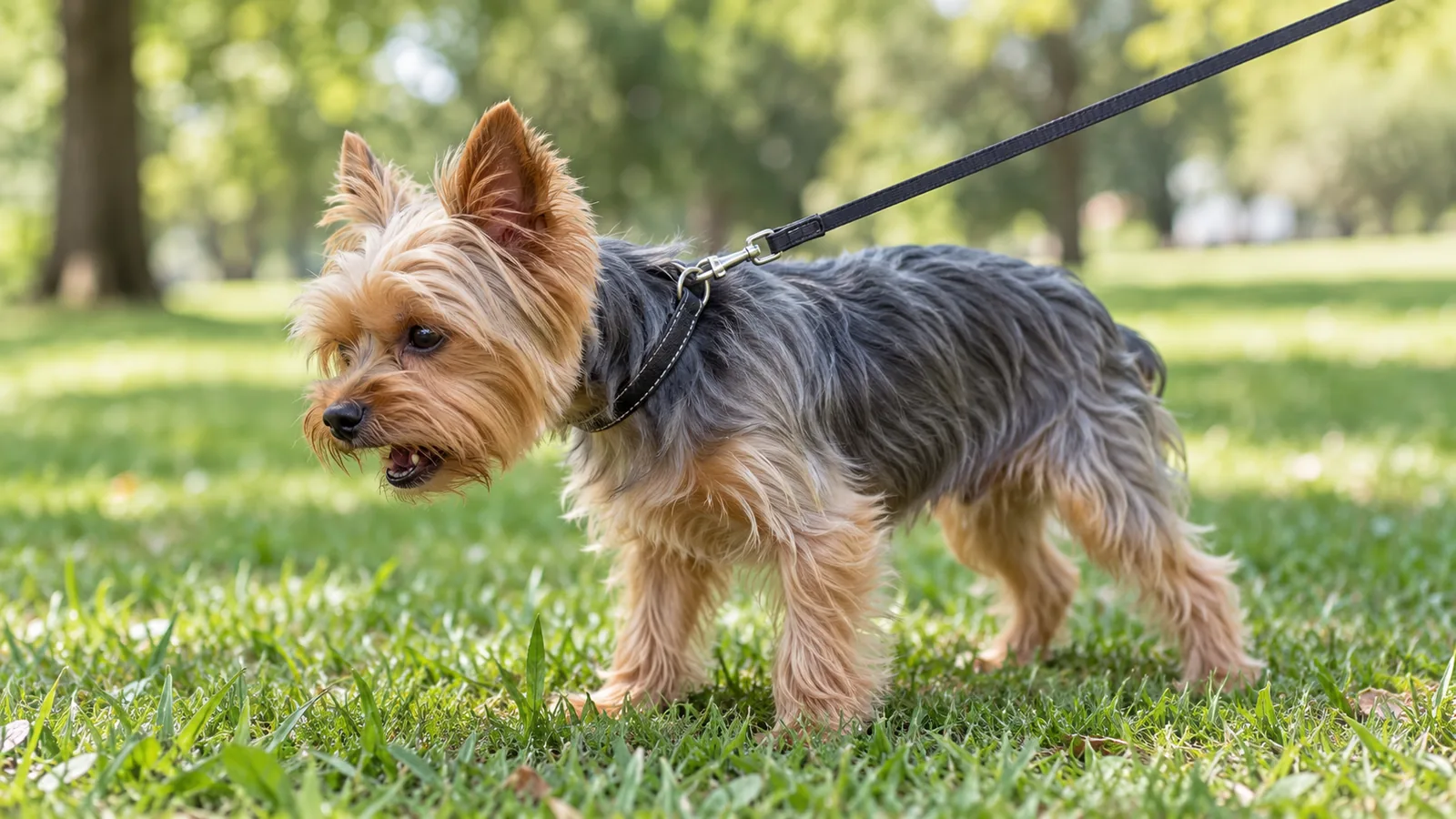
Your Yorkie spots the mail carrier, launches into a victory lap around the living room, and suddenly sounds like a goose. When a small dog makes a honking sound during excitement, a leash tug, or a big drink of water, the most common cause is a collapsing trachea: a windpipe whose supporting rings have gone soft and flatten as air rushes through. It sounds alarming, but most small dogs with this condition go on to enjoy comfortable, active years. Flare-ups tend to follow things you can change, like extra weight, collar pressure, and heat, and only a small share of severe cases ever need surgery.
At Flora Family Vet in Kissimmee, we use our in-house digital X-rays and diagnostics to watch the windpipe and check the heart and lungs in the same visit, since several other problems cause a nearly identical cough. From there, we build a plan with you around your dog's weight, walking gear, and everyday triggers, and we adjust it as your dog's needs change. If the honking fits are coming more often, reach out to our team so we can take a look, and if a cough ever turns into a breathing struggle, we offer same-day urgent care for dogs in Kissimmee.
What to Know About Your Dog's Honking Cough
- A collapsing trachea happens when the cartilage rings in your dog's windpipe soften, letting the airway flatten and honk during excitement, heat, or collar pressure.
- Most small dogs do very well with weight control, a harness instead of a collar, and a steady plan for flare-ups, and only a small minority ever need surgery.
- Heart disease, heartworm disease, kennel cough, and lower airway problems can cause a nearly identical cough, so getting the right diagnosis comes before treatment.
- Labored breathing at rest, blue-tinged gums, or a sudden collapse means your dog needs to be seen right away.
What Is a Collapsing Trachea, and Why Does It Happen in Small Dogs?
A collapsing trachea happens when the C-shaped cartilage rings that hold your dog's windpipe open lose their stiffness and start to flatten. Each breath narrows the airway a little more, which sets off the honk. It's most common in small and toy breeds in middle age, and it usually develops slowly over months or years.
Picture a paper straw that has sat in your iced tea too long: sip hard, and the walls cave in. A softened windpipe does the same thing when your dog pants, pulls, or barks at the neighbor's cat. A thin membrane stretched across the top of the rings can also sag down into the airway, adding to the squeeze.
Tracheal collapse has a strong genetic component, and we see it most often in Yorkshire Terriers, Pomeranians, Chihuahuas, Toy Poodles, Maltese, and Pugs. Extra weight, pressure from a neck collar, airborne irritants like smoke, and repeated respiratory infections can all speed things along.
What Do the Four Grades of Tracheal Collapse Mean?
Tracheal collapse is described in four grades based on how much the airway has narrowed. The grade helps shape the plan, but how your dog feels from day to day matters just as much as the number.
| Grade | How narrow the airway is | What it often looks like | Typical approach |
| Grade 1 | About one quarter | An occasional honk with excitement or a collar tug | Weight and trigger control |
| Grade 2 | About half | Coughing more often, tiring sooner on walks | Trigger control plus medication |
| Grade 3 | About three quarters | Frequent coughing fits and noisy breathing | Layered medication and closer rechecks |
| Grade 4 | Nearly closed | Breathing distress, sometimes even at rest | Stabilization, with referral for a stent or surgery considered |
What Does a Collapsed Trachea Sound Like in Dogs?
The signature sound is a loud, dry honk, often compared to a goose, that fires during excitement, a leash tug, hot weather, or a big gulp of water and frequently ends in a gag or retch. Between fits, many dogs act completely normal, which makes it easy to brush off.
A dry honking cough is the hallmark, but as the airway narrows, other signs tend to join it:
- Running out of steam: tiring early on walks or lagging behind on the way home.
- Noisy breathing: a raspy or wheezy sound, especially after activity.
- Restless nights: trouble settling, or coughing that wakes up the whole household.
- Gagging after meals: a retch that families often mistake for something stuck in the throat.
- Working harder to breathe: more effort than usual, even on calm days.
A honk that now interrupts sleep, shows up while your dog is resting, or keeps getting louder deserves a prompt visit. Our veterinarians will sort out what's actually driving the cough, because the treatment depends entirely on the cause.
When Is a Honking Cough an Emergency?
A honking cough becomes an emergency when your dog struggles to breathe at rest, with a heaving belly, an outstretched neck, or elbows held wide. Blue or gray gums, a sudden collapse, or coughing so relentless your dog can't catch a breath all mean the airway is truly struggling and your dog needs care immediately.
Heat and panic make everything worse, since a dog fighting for air breathes harder and the soft windpipe caves in further. Difficulty breathing that doesn't settle within a few minutes of rest in a cool room is never something to wait out at home. Muggy Central Florida afternoons raise the stakes.
Emergency care breaks that loop with oxygen, a cool, quiet space, and light sedation to slow the breathing. During our open hours, we provide urgent care for dogs and can start stabilizing as soon as you arrive, so call ahead on your way and we'll be ready. After hours, head to the nearest veterinary emergency hospital. If you're unsure whether what you're seeing counts as a pet emergency, call us.
How Do Vets Diagnose a Collapsed Trachea in Small Dogs?
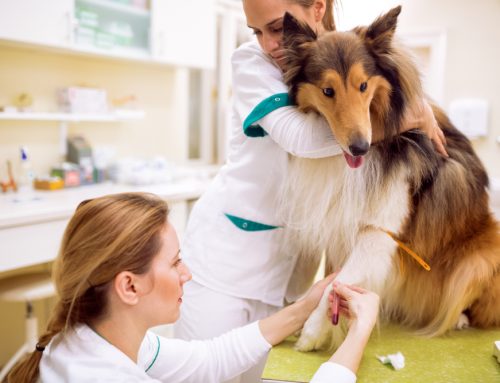
Diagnosis starts with your dog's history and a hands-on exam, and gently pressing on the windpipe often sets off the telltale honk right there in the exam room. X-rays taken as your dog breathes in and out show the trachea changing shape and let us check the heart and lungs. Much of the workup is ruling out look-alikes.
Several conditions produce a cough that sounds remarkably similar:
| Look-alike | How it causes a cough |
| Heart disease | An enlarged heart can press on the airways and fill the lungs with fluid, often causing a cough that's worse at night or after activity |
| Heartworm disease | Worms in the heart and lung vessels cause coughing and tiring, and Florida has some of the highest heartworm rates in the country |
| Chronic bronchitis | Chronic bronchitis inflames the smaller airways deep in the lungs and causes a dry, hacking cough |
| Contagious cough | Kennel cough brings a honking cough that usually runs its course within a few weeks |
| Laryngeal paralysis | The voice box doesn't open fully, causing noisy breathing and a change in bark |
| Pneumonia | A lung infection, often with fever, low energy, and a moister cough |
Our veterinary diagnostics include digital X-rays, an in-house echocardiogram (an ultrasound of the heart) to evaluate heart disease directly, heartworm testing, and access to 3D CT through a mobile partner service when more detail helps. A few trickier cases call for fluoroscopy (a real-time moving X-ray) or a scope passed into the windpipe, and for those, we coordinate a referral and send your records along.
Can Medication Manage a Collapsed Trachea Without Surgery?
Yes, for most dogs. Mild to moderate tracheal collapse usually responds well to a combination of medication and lifestyle changes, with no surgery needed. Because every dog coughs for slightly different reasons, the plan is built around your individual dog and adjusted as the pattern shifts over time.
Many dogs do best on a combination. The main categories include:
- Cough suppressants: quiet the cough, which matters because every cough irritates the airway and invites the next one.
- Anti-inflammatories: calm a swollen, irritated windpipe, sometimes as an inhaled medication given through a small mask and chamber.
- Bronchodilators: help open the smaller airways deeper in the lungs.
- Calming medications: take the edge off the excitement and anxiety that set off fits.
- Antibiotics: used only when a secondary infection is part of the picture.
None of these restores softened cartilage, but together they can quiet the honking and keep your dog comfortable, while regular rechecks catch any step up in severity early.
When Does a Dog Need Surgery or a Tracheal Stent?
Surgery is reserved for severe cases where a dog stays miserable despite a solid medical plan. The most common option, a tracheal stent, holds the windpipe open from the inside. It manages the collapse rather than curing it, so most dogs still need medication afterward, and these procedures belong with a specialist.
Tracheal stent placement involves guiding a self-expanding mesh tube through the mouth and into the windpipe, with no incision in the neck, so recovery is usually quick. The trade-offs are real: stents can shift, tissue can grow into them, and they can fracture, so lifelong monitoring comes with the territory. For younger dogs whose collapse sits in the neck, a surgeon may place supportive rings around the outside of the trachea instead.
Case selection is everything. If your dog's breathing isn't improving with medical care, schedule a visit and we'll talk through the options honestly and connect you with a referral center that performs these procedures.
Which Dogs Are Most at Risk, and What Can You Change at Home?
Small, toy, and flat-faced breeds carry the highest risk, and much of that comes down to anatomy. Breed and build can't be changed, but many of the triggers behind flare-ups can. Weight, collar pressure, heat, and air quality are all things you can influence every single day.
Flat-faced dogs like Pugs, Shih Tzus, and French Bulldogs face an added layer. Brachycephalic airway syndrome stacks narrowed nostrils and an overly long soft palate on top of any windpipe weakness, so these dogs start with less breathing room. Some breeds, English Bulldogs in particular, are born with a hypoplastic trachea, an abnormally narrow windpipe that can be hard to tell apart from collapse without imaging.
What Daily Habits Help a Dog With a Collapsed Trachea?
- Switch to a harness that clips at the chest. It's the simplest, highest-impact change you can make, since a collar presses right on the windpipe.
- Walk shorter and calmer, with two or three mellow outings instead of one long one.
- Work around the Kissimmee heat for much of the year: a slow sunrise loop at Kissimmee Lakefront Park beats a midday stroll every time.
- Keep the air clean by skipping indoor smoking and heavy aerosol sprays, and keep outings short when spring oak pollen or smoke from prescribed burns hangs in the air.
- Run a humidifier during Central Florida's drier winter months, when air-conditioned indoor air can turn scratchy.
- Stay calm during a fit. Speak softly and move your dog somewhere cool, since a relaxed dog breathes slower and eases the squeeze.
How Does Preventive Care Help a Dog With Tracheal Collapse?
Good wellness care lowers the odds of problems that hit a dog with a fragile airway harder.
- Body weight: every extra pound crowds the chest and makes breathing more work, and for many dogs, weight loss alone noticeably quiets the cough.
- Dental health: small breeds are prone to dental disease, and oral infection adds inflammation the body has to manage. Inhalation of bacteria from the mouth is more likely to end in pneumonia since these dogs cannot cough as efficiently. Our dental care includes careful anesthesia monitoring, which matters for dogs with sensitive airways.
- Vaccines: respiratory infections like kennel cough, parainfluenza, and canine influenza inflame a fragile windpipe, and our wellness and preventive care includes vaccine schedules matched to your dog's lifestyle.
- Heartworm prevention: in Florida, year-round prevention protects the heart and lungs from a disease that would add to the breathing burden.
At home, counting your dog's resting respiratory rate while they sleep is one of the best early-warning tools you have. Count breaths for 30 seconds and double it.
| Breaths per minute while asleep | What it means |
| Under 30 | Normal |
| 30 to 40 | Call us to talk it over |
| Over 40 | Come in for a same-day visit |
What Is the Life Expectancy for a Small Dog With a Collapsed Trachea?
Most small dogs with a collapsed trachea live full, comfortable lives for years, and many enjoy a normal lifespan when management stays consistent and flare-ups are handled early. How narrow the airway is at diagnosis is the strongest single predictor, so milder grades caught early tend to do especially well.
Even dogs with more advanced collapsed trachea often stay comfortable with a layered plan and quick attention when things change. Many of these dogs are seniors juggling other issues too, like dental disease, a heart murmur, or stiff joints, so caring for the whole dog rather than just the windpipe is what keeps quality of life high. Twice-yearly senior exams let us fine-tune the plan, and as an AAHA-accredited hospital that uses fear-reducing, gentle handling, we keep those visits calm, which helps a dog whose cough flares with stress.
Questions We Hear About Collapsed Trachea in Dogs
Can a collapsed trachea be cured?
No. A collapsed trachea is managed rather than cured, since nothing restores cartilage once it has softened. Even a stent holds the airway open rather than repairing it. The good news is that consistent management keeps most dogs comfortable for years.
Is a collapsed trachea painful for my dog?
The collapse itself isn't thought to be painful. The coughing fits and the feeling of not getting enough air are distressing, though, which is exactly why we treat it rather than just watching it.
My dog only honks when excited. Is that an emergency?
An occasional excitement honk in a dog who otherwise breathes easily isn't an emergency. It's still worth bringing up early, since catching tracheal collapse at a mild stage gives you the most room to slow it down.
Helping Your Small Dog Breathe Easier in Kissimmee
That honking cough is hard to hear from a little dog, but a collapsed trachea is one of the more manageable long-term diagnoses in small dogs, and you don't have to piece the plan together alone. Our team in Kissimmee will look at the whole picture with you, from the windpipe to the heart, teeth, and waistline, and our Spanish-speaking team members are happy to help, too. When the coughing fits start coming more often, or you simply want to know what you're dealing with, book an appointment or send us your questions. Your dog deserves to breathe easy, and we'd love to help make that happen.
Reviewed by Dr. Lima